Friday, 5 October 2012

Quadrants of Parrying II


            My apologies if the last post on “Quadrants of Parrying” was below the usual standard. I was in the early stages of a cold and that is not the best time to try and wrestle with explanations. Some further thoughts on the topic, hopefully a little more coherent.

            Which defensive technique you use against an attack will depend not just on what quadrant  it comes from but also from the relative position of the hand you intend to use. It will be recalled that the original description was in a book on knife fighting and the assumption was that the defender would start in the recommended knife-fighting stance, which for that author had the hand in line with the elbow that was the hypothetical intersection of the quadrants. You may not be in a perfect stance when you have to use your hands to defend yourself, so let us look at attacks from the four quadrants once again, this time with some consideration of where the hand begins:-

            High Outer Attacks. Most High Outer Attacks can be dealt with by the various high outward parries. The Karate Outside thrusting parry was mentioned previously and more circular parries such as the “Wave” or “Window wiper” can be used too. Parries with the radius side of the arm, such as the Wing Chun Tan Sau, using the hand in a palm up position can also be used. An inward parry might be used if the hand started in a low outside position but it is likely that to achieve this you would need to step back and would have avoided the attack anyway.

            High Inside Attacks. High Inside Attacks can be dealt with by any of the inward parries mentioned in the previous post. If you hand was positioned well to the inside, such as near your opposite shoulder then an attack in this quadrant might be deflected with an outward parry.

            Low Outside Attacks. Attacks to the low outside quadrant are dealt with by low outward parries. Very low attacks may be parried outward with the leg instead of the arm. As with all attacks, evasion and avoidance are better than contact.

            Low Inside Attacks. The Low Inner Quadrant is occupied by a considerable proportion of the body. How to parry attacks to this quadrant will depend on the relative starting position of the hand.  If the hand is by your side then low attacks such as to the stomach or groin are deflected by the low inward parry. This is effectively twisting your waist so your forearm swings across, removing the intended target and knocking the attack across the inside gate to empty air. If the attack is at a slightly higher level then the Bong Sau type technique is used with the elbow raised and the hand hanging down. What is interesting about this is the bent elbow allows the arm to fold on contact, absorbing force but still redirecting the attack. If the hand was above the elbow when an attack was made to the Low Iner Quadrant then a low outward parry can be used to sweep the attack out into the low outer quadrant.
         If you have enjoyed this article or it has been helpful to you please feel free to show your appreciation. Thank you.
The Books

http://www.angelfire.com/art/enchanter/epsdbook.html
http://www.lulu.com/shop/http://www.lulu.com/shop/phil-west/survival-weapons-optimizing-your-arsenal/paperback/product-21488758.html
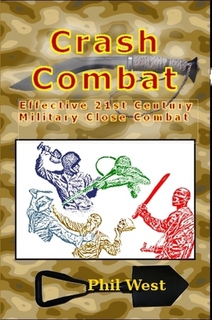
http://www.lulu.com/shop/phil-west/crash-combat/paperback/product-22603842.html
https://www.amazon.com/Anatopismo-Underrealm-Novella-Phil-West-ebook/dp/B077G7MMFM

Metallurgy


            For this Friday’s humour, a cartoon from https://xkcd.com/1114/ dedicated to my gamer friends and readers. Thanks to Nate for finding this one.
         If you have enjoyed this article or it has been helpful to you please feel free to show your appreciation. Thank you.
The Books

http://www.angelfire.com/art/enchanter/epsdbook.html
http://www.lulu.com/shop/http://www.lulu.com/shop/phil-west/survival-weapons-optimizing-your-arsenal/paperback/product-21488758.html
http://www.lulu.com/shop/phil-west/crash-combat/paperback/product-22603842.html
https://www.amazon.com/Anatopismo-Underrealm-Novella-Phil-West-ebook/dp/B077G7MMFM

Thursday, 4 October 2012

Quadrants of Parrying.


It is interesting how sometimes just a turn of phrase or slightly different view of something can change your understanding of it. You may not know anything new about the subject, but how your understanding of how the different parts of what you know work together changes.

As I remark in my book, blocking/ parrying actions can be described as resembling a diamond shape. A parry with either limb is either Inward/ High, Outward/ High, Inward/ Low or Outward/ Low. Karate is one of the exceptions to this model since the direction of the defensive hand moves are better visualized as being either High, Low, Outward or Inward.

Recently reading a book on knife techniques the author comments that any attack can only come from one of four possible quadrants, which correspond to Inward/ High, Outward/ High, Inward/ Low or Outward/ Low. What was novel to me was that he visualized these four quadrants by imagining a vertical cross shape, centered on the elbow. I suspect this model may originate from some school of the Filipino Martial Arts. For any attack from a particular quadrant there was only one basic defensive move. A high attack on the inside would be met by an inward cut with the point of the blade up, a low attack on the inside by an inward cut with the point down. Attacks from the outside of the elbow would be met with outward cuts, point up or down depending on if the attack was high (above the elbow) or low.

What works with the knife often works with empty hand techniques. Let us consider attacks from the four quadrants (relative to the elbow) and how we are likely to deflect them.

High Outside Attack: Probably the most likely response is the thrusting or outward swinging action we see in the Outward Karate parry. The same fundamental action can be seen in boxing and many other fighting styles.

Low Outside Attack. Most responses are variations of the Karate Low parry. Drop your hand and let it swing to your outside, turning your hips outward. With a knife you would make this as a cut, with unarmed you would deflect with the hand or forearm.

High Inside Attack. This body motion used to counter this attack has a number of variations. First we have the Inward Parry of Karate, using the forearm in an approximately vertical position. This is quite a strong technique and covers a good area. Secondly, we can use the hand to make contact with the attacking limb and strike or push it away. This has a little more reach than the Karate Inward Parry but is less forgiving when it comes to accuracy. Thirdly, we can punch or thrust past the attacking limb and make contact with our forearm. Which variant you use will depend on the actual attack and what you are most adroit at using.

Low Inside Attack. This is an interesting area, since in the Karate model all low attacks tend to be dealt with by sweeping them to the outside. Most attacks that come in under the elbow can be dealt with this way. It is also possible to deflect inward. With a knife this would be an inward cut with the point downward. The thumb will be low and the palm upward to hold the knife edge in the correct orientation. The little finger side of the arm would be the “leading edge”. With the empty hand the low inward parry is more likely to be made with the palm towards you and the thumb side the “leading edge”. Contact area is likely to be the thumb side of the hand or forearm or the outside of the forearm. Actual technique may also vary with the height of the low attack. The above assumes a relatively straight arm is used. For a higher low attack a variation resembling the Bong Sau (Wing arm) of Wing Chun might be useful. Here the contact area will be the ulna edge of the forearm or its outer/upper surface.


            Can you defend with just four basic motions? Possibly.
 
This illustration from the book shows eight defensive moves from JKD and if you look carefully you see each covers one quadrant for either the forward or rare arm. Are the techniques the simplest/most efficient/most fumble-free for a quadrant? In the book I discuss how the P’eng Hinge stance can be used to deflect the majority of attacks with just and outward or inward rotation. There are parallels to this in staff or bayonet fighting too. But there will also situations when an additional technique or variation can do things more effectively. Attacks to the low inside quadrant are a good example of this.
         If you have enjoyed this article or it has been helpful to you please feel free to show your appreciation. Thank you.
The Books

http://www.angelfire.com/art/enchanter/epsdbook.html
http://www.lulu.com/shop/http://www.lulu.com/shop/phil-west/survival-weapons-optimizing-your-arsenal/paperback/product-21488758.html
http://www.lulu.com/shop/phil-west/crash-combat/paperback/product-22603842.html
https://www.amazon.com/Anatopismo-Underrealm-Novella-Phil-West-ebook/dp/B077G7MMFM

Peeke at the Quarterstaff.


            Posts are likely to be less frequent for the next couple of months as I have less time in front of the machine. I was intending to write about a technique I encountered while reading about Quarterstaffs, but thought first it might be wise to set the scene with a classic true tale of the Quarterstaff in action.

http://ejmas.com/jwma/articles/2001/jwmaart_docherty_0501.htm

http://martialhistory.com/2009/02/quarterstaff-vs-rapiers-peekes-three-to-one/


"In the year 1625 England and Spain were at war and Peeke was serving in an English naval squadron, under the command of the Earl of Essex, which was attacking a Spanish naval stronghold. After heavy and accurate bombardment the English captured the fortress, whereupon, they sent forces ashore to carry the attack inland. In the wake of the English landings sailors were sent ashore to forage for food. Richard Peeke, of Tavistock in Devon, was among them. Unwisely he foraged alone and paid the price for his mistake when he was attacked by a patrol of spanish musketers. After a furious fight, during which Peeke was wounded twice, he was captured and taken in chains to Cales ( Cadiz ). from there he was transfered to Xeres where he was put on trial. Present at his trial, which in reality was a miitary interrogation, were four Dukes, four Marquesses, and four Earls. After much questioning Peeke was asked if he thought that the Spanish soldiers present would prove such 'hennes' as the English when they landed in England the following yeare. "

"No" replied Peeke. "They would prove to be pullets or chickens."

Peeke's insolent reply brought forth an angry response from the Spaniards.

"Darst thou then ( quoth Duke Mdyna, with a brow half angry ) fight with one of these Spanish pullets."

Peeke replied that,

"...hee was unworthy the name of an Englishman, that should refuse to fight with one man of any nation whatsoever."

At this Peek's chains and shackles were removed and a space was created for him to fight a Spanish champion by the name of Tiago. Both were armed with rapier and poinard. The ensuing fight continued for some time before Peeke, using the guard of the poinard, trapped the blade of Tiago's rapier and simultaniously swept the Spaniards feet from under him. Peeke's rapier, held to the throat of senor Tiago brought forth the necessary capitulation. Spanish pride had been sorely wounded and it was demanded of Peeke whether he would be willing to fight another Spaniard. Peeke replied in the affirmative provided he was allowed to fight with.

"... mine owne countrrey weapon called the quarter - staffe."

Upon this remark the Spanish unscrewed the head from a halbered to create a makeshift quarterstaff. Armed with the weapon of his choice Peeke stood ready to meet his next challenger. However the Spanish were clearly no longer so confident in the prowess of their soldiers for, to Peeke's consternation, two swordsmen stepped forward to fight him. Peeke sarcastically asked if more would like to join them. The Duke of Medyna asked how many he desired to fight.

"Any number under sixe". replied Peeke.

The Duke smiled scornfully and beckoned a third man to join the original two. Peeke and the rapier men warily traversed each other, all the while thrusting and warding, till finally Peeke gambled on an all out attack. His first blow a left one of his adversaries dead and his subsequent blows left the other two injured and disarmed. No doubt they also left the spanish seriously questioning the wisdom of their invasion plans. Peeke's feat so impressed his Spanish captors that they released him and granted him safe conduct to England.

 
         If you have enjoyed this article or it has been helpful to you please feel free to show your appreciation. Thank you.
The Books

http://www.angelfire.com/art/enchanter/epsdbook.html
http://www.lulu.com/shop/http://www.lulu.com/shop/phil-west/survival-weapons-optimizing-your-arsenal/paperback/product-21488758.html
http://www.lulu.com/shop/phil-west/crash-combat/paperback/product-22603842.html
https://www.amazon.com/Anatopismo-Underrealm-Novella-Phil-West-ebook/dp/B077G7MMFM