Tuesday, 29 March 2016

Hammer-fist and Single Whip.


Sometimes you search for something only to discover it was close by all along. A case in point:-

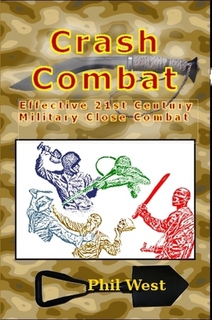
In my recent book, Crash Combat, I reflect that the hammer-fist is a somewhat underappreciated weapon in martial arts. I may have made this assertion in my previous book too. Reading Joseph Wayne Smith’s book on Wing chun he makes a similar statement.

Hammer-fist can substitute for the chop, back-fist and even some closed fist punches. It is much less likely to result in self-injury than some of these techniques. It is easy to perform correctly and can deliver powerful blows to both hard and soft targets. Along with the palm-heel it is probably one of the best hand strikes that we have.

Naturally enough, I was experimenting with some hammer-fist attacks the other day. I’d been looking at the rapid 270-360° turn that is possible by using the “closed step” of Pa-kua/Bagua. (See my book for details). This could be used to power a spinning back-fist to strike a foe in the outside gate. But a true back-fist can be fiddly, requiring a terminal flick of the wrist and impact with the first two knuckles. A spinning hammer-fist is more logical and for most fighters more powerful.

I notice that if I bend my wrist inward a fraction my hammer-fist seems a little stronger or more stable at the moment of impact. I also note that this mode favours a sort of “snap”. I can throw the technique with a relaxed arm and hand and snap into a clenched hand just before impact. This, of course, lets the arm and hand acquire more initial speed and produces a more powerful attack with less muscular effort.

From a variety of positions I can just flick my arm and have it land in a hammer-fist. This curve of the wrist seems a technique worth cultivating.

And then it dawns on me! This is the hand form of horse-foot palm from Tai chi’s Single whip. I have written about this as a parrying technique and even as a form of punch. I have probably even written about hammer-fist like strikes with this hand form. But I had not grasped one of the other important things that posture was trying to teach:- that a relaxed, slightly bent wrist gives you a very efficient hammer-fist.

As always, experiment for yourselves. Can you use hammer-fist instead of your other strikes? Can you relax more to make it faster and more powerful?

The Books
http://www.angelfire.com/art/enchanter/epsdbook.html 

http://www.lulu.com/shop/http://www.lulu.com/shop/phil-west/survival-weapons-optimizing-your-arsenal/paperback/product-21488758.html

http://www.lulu.com/shop/phil-west/crash-combat/paperback/product-22603842.html
 

Sunday, 27 March 2016

Cross Stepping Post: Part Two

 
It occurs to me this morning that the previous post on “the Post” needs a little more information. Some of you reading that post will not be familiar with Tai chi, Bagua or have read the relevant parts of my book. If you are only familiar with hard, external interpretations of martial arts you may find the seemingly simple movements of the Cross stepping post surprisingly difficult.

The essence of the Cross stepping post is the cultivation of stability and balance. Your upper body needs to be relaxed and your weight down in your pelvis. Since we are not performing the arm movements at this stage your arms should hang down by your sides, relaxed like hanging vines. If you are used to putting lots of muscular tension into you stances this will probably be one of your first problems in performing the Post.

From Tai chi we have the advice:

1.                   Sinking of shoulders and dropping of elbows.

2.                  Relaxing of chest and rounding of back.

When you attempt the movements of the Post your upper body should be as relaxed as possible, having a slightly hunched shoulders look that comes from a lack of tension.

The other useful thing to remember is that in martial arts movement generally comes from the waist. Don’t attempt those kick-like foot movements just by moving your leg. You will need to rotate your waist/hips to swing them around.

I hope that helps. Persevere and I will post some more information on the exercise soon.
The Books
http://www.angelfire.com/art/enchanter/epsdbook.html 

http://www.lulu.com/shop/http://www.lulu.com/shop/phil-west/survival-weapons-optimizing-your-arsenal/paperback/product-21488758.html

http://www.lulu.com/shop/phil-west/crash-combat/paperback/product-22603842.html


Friday, 25 March 2016

Cross Stepping Post: Part One.


Recently I have been looking into a concept that Erle Montaigue called “the Post”. Erle described the Post as being an abstract way to learn very practical things. He as even gone as far as to say that the Post contains two exercises that give every thinkable internal body movement for self-defence without having to think too hard, and are probably one of the most valuable training aids ever . Certainly this apparently simple sequence has much greater depth than is first apparent. I am going to devote a few blogs to this topic and invite the reader to try it with me.

What  Erle calls the Post is actually two sequences, one from Tai chi and the other from Bagua. The Tai chi one is called “Stepping over the gate” and the Bagua “Cross stepping post”. Initially I am only going to deal with Cross stepping post.

If you dislike long complicated katas you will be pleased to hear that Cross stepping post has only four different steps. These are mirrored on the left and right sides so there are actually eight steps and two linking sets to change sides. Complexity of the arm movements varies. Performing this exercise without the arm movements is very beneficial since it lets you concentrate on your balance and foot movements. You can go through the foot movements anytime that you are standing around, waiting for the bus etc. In his main video on the post (MTG54) Erle demonstrated a very simple set of arm movements. In MTG55 he also details the post and there demonstrated a more varied set of arm movements. On this video Erle points out that what is actually going on internally is actually more important than the actual physical movements. Bear this in mind as you practice.

Both videos are available as downloads or DVDs from http://www.taijiworld.com

I am going to introduce the Cross stepping post gradually. For this first blog I am going to suggest learning just two of the steps. They are similar, and once you have some grasp of these you will have learnt half the necessary moves. Just practicing these two steps will also probably reveal to you that your balance and stability is not what they might be.


The first step we will learn is actually the second step in the sequence. I call this the “Forward foot kick” although you must keep in mind that this foot action and the others have many other applications than the one immediately apparent. It is not just a kick!

Your feet are close together and your knees are probably brushing against each other. As the lead foot heel withdraws past the other heel the foot straightens up so the toes point forwards. The foot goes back about a foot length and swings in an arc to the forward position. Heel and toe are placed down at the same time and you should be in balance for the entire movement. Cross stepping post actions are performed without obvious shifts in weight such as leaning.

The second move is step four, a “Back foot kick”. Position of the feet is similar but a little more natural in that there is some space between the forward and rear foot. The feet are close enough for the knees to brush. In all these moves the toes always point forward or to the outside. That is, if your right foot is pointing at an angle it is to the right, and to the left for your left foot.

The beginning of this step puts some torsion on your waist and hips. You utilize this by moving the back foot in an arc and placing it down. This is a very similar movement to the forward foot kick but uses the rearward foot and has less initial backward movement.

No arm movements yet. Work on your balance and footwork Experiment with these two movements for a couple of days. See if you can improve your internal balance.

The Books
http://www.angelfire.com/art/enchanter/epsdbook.html 

http://www.lulu.com/shop/http://www.lulu.com/shop/phil-west/survival-weapons-optimizing-your-arsenal/paperback/product-21488758.html

http://www.lulu.com/shop/phil-west/crash-combat/paperback/product-22603842.html


Wednesday, 23 March 2016

Complete Wing Chun.


           One surprise about writing this blog is that I have written many less book reviews that I expected.

A few weeks back I did come across an interesting trilogy of books on Wing chun by Joseph Wayne Smith. Many martial arts have a degree of secrecy, mystery and mythos. Historically there was sometimes good reason for information control. In the modern world, however, such practices can be counterproductive. Smith is very interested in the biomechanics of Wing chun and why somethings may work better than others.

Those of you that have read my first book will know that I endeavoured to explain the mechanics behind a number of martial arts and self-defence techniques. There was not room to teach every Judo throw so instead I taught the concepts that are common to the majority of such throws. Smith’s books concentrate on Wing chun and are aimed more at the student who has some familiarity with the basics. It is not a “how to do it” book, more a “why this works” book

The three volumes give a detailed analysis of the various forms including those for the weapons of Wing chun. There are sections on such techniques as pushing hands and sticky leg.

The second volume has an interesting discussion of how the techniques of Wing chun might be complimented by those of Muay Thai and White Crane (Pak hok pai) kung fu. I hope to expand a little on some of these concepts in later blogs.

Word to the wise:- The three volumes are collected together as “Wing Chun Kung Fu a Complete Guide”. Naturally I did not notice this until I had brought all three volumes separately. Buying the collected version will save you a few pennies so you can buy one of my books as well.
 
The Books
http://www.angelfire.com/art/enchanter/epsdbook.html 

http://www.lulu.com/shop/http://www.lulu.com/shop/phil-west/survival-weapons-optimizing-your-arsenal/paperback/product-21488758.html

http://www.lulu.com/shop/phil-west/crash-combat/paperback/product-22603842.html