Wednesday, 18 January 2017

Follow the Numbers!


The other day I saw a post on facebook. I think it was trying to make a point that the chances of being killed by a moslem fundamentalist were really small. As is often the case with such things there was some very selective cherry picking of the data. Number of people who had been killed by buses was given, but not the number killed by road traffic accidents in general. The author had chosen to make the highest number that they posted as deaths from firearms.

Something of interest struck me. The figure given for “deaths by firearms” was 11,000. Or should I say, “only 11,000”. For a country with a population of around 350 million 11,000 is actually a very low percentage. Looking at other sources I am not sure how they got that figure. It may be meant to be murders with firearms.
Intrigued, I did some research:
Deaths from firearms in the US average about 10.5 per 100,000 population. Or 0.0105 per cent! Homicides by firearm are 3.43-5.0 per 100,000, suggesting that most firearm fatalities are accidents, suicide or legitimate self-defence. Deaths from road traffic accidents vary from 10 to 20 per 100,000 population per year. So you are three to four times more likely to be killed by an automobile than murdered with a gun. Chances of a non-fatal injury from an automobile are much higher.
 
Looking at the cause of death figures for 2014 is interesting. The total number of deaths for that year was 2,626,418 which is 823.7 per 100,000. Heart disease and cancer were the main killers. What is interesting is that diabetes killed 76,488, which is 23.98 per 100,000. 55,227 or 17.32 per 100,000 died from “Influenza and Pneumonia”. To place this in perspective, the number of Americans killed in the entire Vietnam war was around 58,315.
 
Think about that for a second! In a first world country that claims to be a superpower tens of thousands of people are dying from diabetes and chest infections!
 
Next time you see a politician or someone else claiming that guns are an important issue and something needs to be done about them remember the above and think about what they are really trying to distract you from.

The Books
http://www.angelfire.com/art/enchanter/epsdbook.html 

http://www.lulu.com/shop/http://www.lulu.com/shop/phil-west/survival-weapons-optimizing-your-arsenal/paperback/product-21488758.html

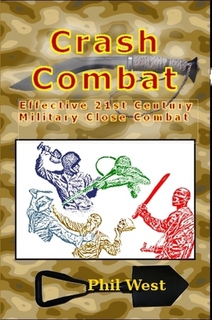
http://www.lulu.com/shop/phil-west/crash-combat/paperback/product-22603842.html

WW2 Bayonet Part One.


Many modern bayonet designs are not particularly useful. I have an SA-80 bayonet that is inferior to my kukri in every respect. It even weighs and costs more. For soldiers who are attempting to lighten their load the bayonet is often one of the first things to be discarded.

Bayonet fighting, however, is still an important skill to become familiar with. Even if you do not have a bayonet or do not have time to fit it bayonet fighting skills can be utilized. Butt strikes and thrusts work the same with an unbayonetted rifle. With the bayonet a thrust from the muzzle can still have a telling effect. The basic principles also apply to long batons or some improvised weapons. For this reason both Crash Combat and Attack, Avoid, Survive have sections on bayonet fighting without a bayonet.

Training in the bayonet was also considered to be a good way to reduce a recruit’s tendency to hesitate and to increase their commitment to an advance.

The second paragraph of a British WW2 manual makes the wise observation:

“2. It is impossible to drill men into becoming good bayonet fighters as it is undesirable for those of different physique to adopt exactly the same style. Words of command will, therefore, be reduced to a minimum, and men will be encouraged to develop a style suitable to their size and build, provided that the methods laid down are followed.

3. By his own example the instructor must instil a spirit of energy and determination in his squad.”

That is good advice, not just for bayonet instruction.

The illustration below is taken from the manual above and shows a useful training aid for bayonet skills. The ring is used as a target to develop accuracy and coordination. The padded end is used for the practice of counters against attacks.
 

Many armies used similar devices for training. Below is a rather nice Soviet-era illustration of a course to teach soldiers. Rather reminds me of a crazy golf course! In other illustrations parts of the course seem to be used with knives, entrenching tools or unarmed techniques. Elsewhere strikes can be seen being made with the muzzle, drum and stock of the PPSh-41.


The Books
http://www.angelfire.com/art/enchanter/epsdbook.html 

http://www.lulu.com/shop/http://www.lulu.com/shop/phil-west/survival-weapons-optimizing-your-arsenal/paperback/product-21488758.html

http://www.lulu.com/shop/phil-west/crash-combat/paperback/product-22603842.html


Monday, 16 January 2017

Soldier's Load: Sleeping Light.

Recent posts have mainly been about “the soldier’s load”. This blog is mainly about self-defence and preparedness so generally I try to keep things from getting too military. This has been a useful topic, however, since not only does it reveal solutions for civilian application but it also illustrates the differences between civilian and military applications. Today I will look at lightweight solutions to the need for shelter.
    
I recently saw an opinion that if a man who was bivouacking was surprised in the night he would take refuge in the dark of the forest. If a man in a tent was surprised, however, he would tend to take refuge behind the false security of his tent walls. Shelter for a soldier must consider tactical factors. Many of the tent designs a civilian might use are not suitable for military use unless required by a particular environment or situation. 
 
A shelter can be thought of as a sort of sandwich. The uppermost layer is responsible for keeping off the rain, wind and sun. The middle layer keeps the sleeper warm. The bottom layer insulates the sleeper from damp ground and ground chill.


As an illustration of this let us consider how infantry in the American Civil War slept. Men would sleep in pairs, buttoning their shelter halves together to form a “dog tent”. Rifle-muskets might be used to support this structure. A gum-blanket was used as a ground cloth and each man slept wrapped in his woollen blanket. If the shelter cloth had been lost or discarded the top layer of the shelter would be created from the other man’s gum-blanket.


The basic soldier shelter has not changed that much since then. The ground sheet may now be plastic or a foam kipmat. The inner layer may be a sleeping bag or poncho liner rather than a blanket. A basha-sheet or poncho may be used instead of a cloth shelter half.
 
Unlike many civilian outdoorsmen the soldier is seldom alone. The makings of a shelter can be shared between a pair of men. For example, each man needs to carry only one support pole. As an aside, it is amusing how many kit lists I see that list the poncho as a shelter item yet do not include any support poles for the shelter. Perfectly positioned trees or ideal poles are not always to be found! 
Suppose each soldier carries:

  • Poncho.
  • Support pole sections and pegs. Enough pegs to also secure a groundsheet. A screwdriver.
  • Lightweight sleeping bag with liner.
  • A ground cloth or kipmat.
 
Probably one man will sleep while the other stands watch. One of the ponchos creates the upper layer of the shelter. The other poncho can be worn by the man on watch if it rains. The other soldier sleeps in the lightweight sleeping bag and liner. If it is particularly cold he can use one sleeping bag within the other. Bulky “three or four season” sleeping bags are not necessary when it is warmer to use two lighter ones together. Giving each soldier his own sleeping bag liner makes sharing a sleeping bag a little more pleasant. 
 
Beneath the sleeping soldier is the kipmat and a groundsheet. He may have placed found materials beneath the groundsheet to serve as a mattress. Kipmats can be trimmed to size to reduce weight and bulk.


A poncho has been chosen for the upper layer since it is the lightest and most versatile option. The poncho can be used as foul weather clothing as well as a shelter. On the downside the poncho is less robust than some of the other options. This is one of the reasons I do not suggest the poncho as a groundsheet.
 
The actual groundsheet could be an all-weather blanket but can be made from any piece of suitable waterproof material. It only needs to be large enough for one or two soldiers to sleep on so can be smaller than a poncho. In the past I have proposed a groundsheet with a brown side and a high visibility side so it can be also used for ground to air signals. 
 
One man carries the kipmat, the other the groundsheet. A bivi-bag for use with the other items may also be carried by the man with the groundsheet. A pair of sandbags are carried for the eventuality that the sleeping man must keep his boots on. A hammock can be carried in environments where such might prove useful. Poncho liners or blankets may be added where the weather requires them.


The above system is designed with a measure of redundancy. The kipmat and groundsheet can be used on their own if one is lost. With only one poncho the bivi-bag still provides some protection, etc. Many of the proposed items can also be used as foul or cold weather clothing. This is why some of the recent posts have been on subjects such as cloaks.


The Books
http://www.angelfire.com/art/enchanter/epsdbook.html 

http://www.lulu.com/shop/http://www.lulu.com/shop/phil-west/survival-weapons-optimizing-your-arsenal/paperback/product-21488758.html

http://www.lulu.com/shop/phil-west/crash-combat/paperback/product-22603842.html


Sunday, 15 January 2017

Kidney Pouches and Combat Order.

Some armies define a soldier’s combat equipment as being three levels.  This paper gives a concise account of the British Army’s perception:
  • Assault Order, to provide for operations lasting a few hours. Items needed to “close and defeat an enemy then hold off his immediate counter attack. Weapons, ammunition, water and digging tools”. NBC equipment, communication gear, a flashlight and immediate first aid (field dressings) might also be included here.
  • Combat Order for operations of 24hrs/ overnight. Assault order with some food and “just enough clothing to keep warm and dry”. This level might include some provision for sleeping in reasonable comfort.
  • Marching Order, containing “all of the man’s issued items that he had in the field.” Some armies have had some very odd ideas what should be in this catergory! The wehrmacht infantryman took to the field with his best shoes and sports kit in his pack. At least this pack was carried on the company wagon.
To the above list I would add a fourth level, the Emergency Order. These are the things you have in your pockets that will be available if your webbing is lost. See my post on “sundries” for suggestions in this direction.


Theory and practice often diverge! For most British soldiers in the last quarter of the 20th century there was no real distinction between Assault order and Combat order. (For clarity I am using photos of the 58 pattern webbing. More recent systems use the same design.) Many of the “Combat Order” items were carried in the kidney pouches and poncho roll. These also carried not so vital items such as boot polish! The weight of the webbing with the kidney pouches and contents necessitates that the yoke be more thickly padded and this can interfere with the wearing of some rucksacs. The kidney pouches could not be easily removed from the webbing, so the infantryman went into the assault carrying a significant weight of equipment he did not immediately need. During one assault in the Falklands paratroopers discarded all of their webbing and carried ammunition in their pockets!

The kidney pouches also caused considerable problems with the design of military rucksacs. A good rucksac puts most of the weight on the top of your pelvis. It may have a hip belt to facilitate this. The main function of the shoulder straps is to keep the load in position. Kidney pouches or similar items hinder this. While British army designed rucksacs may resemble civilian models they behave quite differently.
In a recent post we looked at the Vietnam chest rig. This, combined with the grenade carrier and waterbottle on the belt is obviously an Assault order. Marching order was created by adding a rucksac and it will be noted that there is nothing at the back of the belt to hinder a comfortable fit. Note also that the shoulder straps of the chest rig are relatively unpadded too. The NVA soldier does not appear to have a formal means of “Combat Order” but obviously such an intermediate level of load is desirable. See my article on Soldier's sundries. Likely contents might include:
  • Compact wash kit and repair kit
  • Toilet paper
  • Spare socks
  • Canteen cup and brew kit
  • One or two days rations
  • Poncho/ basha
  • Sleeping bag/ blanket/ poncho liner
  • Poles and pegs
  • Ground cloth/ kip mat/ airbed/ hammock.
  • Hat(s), gloves.
  • Rope


Some of the popular designs of civilian rucksac that have been used by British soldiers have detachable side pockets which can be joined together to create a small pack. The British Army committees in this paper regarded this as an acceptable way to carry loads of less than full Marching Order. Sadly they did not follow on to the logical step of eliminating the kidney pouches.


A pack formed from a pair of side pockets has a capacity of about 20-30 litres. It can easily accommodate the contents of a pair of kidney pouches. They are long enough to hold shelter pole sections. Some lightweight sleeping bags pack down to a rugby ball-sized mass so it is quite possible room for such a sleeping bag can be found inside such a pouch. If a number of accessory patches are fitted to the outside of the pouches items such as groundcloths, blankets, ponchos and kipmats can be tied under, around and between the two pouches. A mesh pocket would allow a towel or poncho to dry.
Such an approach eliminates the need for kidney pouches. It allows the use of more efficient rucksacs for marching order and gives the soldier a true, lighter assault order.

         If you have enjoyed this article or it has been helpful to you please feel free to show your appreciation. Thank you.
The Books

http://www.angelfire.com/art/enchanter/epsdbook.html
http://www.lulu.com/shop/http://www.lulu.com/shop/phil-west/survival-weapons-optimizing-your-arsenal/paperback/product-21488758.html
http://www.lulu.com/shop/phil-west/crash-combat/paperback/product-22603842.html
https://www.amazon.com/Anatopismo-Underrealm-Novella-Phil-West-ebook/dp/B077G7MMFM