I spent this weekend reading an interesting book that a friend lent me. “The Battle of Sidney” by John Vader is a hypothetical history of the invasion of Australia by Japan during the Second World War.
In this book an officer called “Brain Murray” proposes a way that the training of soldiers can be streamlined to produce relatively competent fighting men in about a week. Some of this method was about eliminating what the recruit did not really need. There is little point in training a man to salute perfectly and then trying to train him not to salute when in combat. (Saluting identifies leaders as targets!)
I intend to scan the relevant sections of the book and they may be the subject of a future blog or web article.
No mention of unarmed combat is made in the “Murray system” but it seems prudent to give a recruit at least a modicum of instruction. If I was given this task and only had a few hours of instruction scheduled what would I choose to teach?
For a quick course Fairbairn’s “Get Tough” course seems a good place to start. “Arwrology” has some good ideas on combat relevant calisthenics. Initially what I would teach would not be unarmed combat. A soldier is most likely to need close combat techniques if his firearm jams or is out of ammo. Lesson one would be how to use a rifle as a melee weapon. Firstly the swinging and thrusting strikes with the butt. Since modern soldiers seldom fix bayonets I’d next teach thrusts with the naked muzzle. As an impact weapon the rifle muzzle can be very effective on various parts of the body. Defensive moves with the rifle are basically the outward and inward parry, which is a good introduction to later sections.
Mention would be made of the use of entrenching tools and knives for defence but more detail of that might be reserved for a later lesson.
Next would come the instruction on unarmed techniques. Since it is most familiar to most men we would start with the closed fist. Emphasis would be made that punches with the closed fist are best suited to targets below the ribs. Hook, shovel hook and low reverse punches would be taught and practiced.
After this the palm heel strikes would be taught. This would include the palm heel uppercut (Fairbairn’s “Chin jab”), jabs, crosses and high hooks. This would be followed by knife-hand and elbow techniques. Leg techniques would include the side kick/stomp, knee strikes and “broncho kick”.

The defensive component of the first lesson would include some instruction on Long Har Chuan and Ginga. Finally there would be some basic grab release lessons as in Fairbairn’s book, although I would include the “under and outside” method of wrist escape in addition to those he used. The day would finish with some “Milling” to get the recruits accustomed to engaging an opponent at close range. Possibly the Milling should be at the start of the program? If good progress has been made breakfalls will be introduced on the first day.
The second lesson would be on another day and would start with a quick recap of some of the techniques and introduce the finger jab and other distraction techniques. This would be followed by instruction on the knife, entrenching tool, machete, helmet and riot baton. The second lesson would include using the entrenching tool as a shield to make openings for the use of the faster knife. There might be some instruction on breakfalls and quickly regaining your feet. Once breakfall techniques have been taught they are incorporated into other activities such as PT or route marches. The second session will include instruction on sentry stalking and introduction to techniques such as the garrote, naked strangle and “the Moshe Neck Roller”.

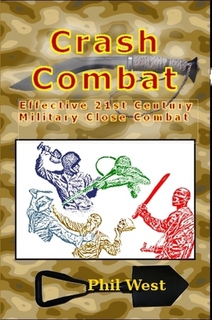
For more in depth descriptions of all of these techniques and more, buy my book!
If you have enjoyed this article or it has been helpful to you please feel free to show your appreciation. Thank you.
The Books



In this book an officer called “Brain Murray” proposes a way that the training of soldiers can be streamlined to produce relatively competent fighting men in about a week. Some of this method was about eliminating what the recruit did not really need. There is little point in training a man to salute perfectly and then trying to train him not to salute when in combat. (Saluting identifies leaders as targets!)
I intend to scan the relevant sections of the book and they may be the subject of a future blog or web article.
No mention of unarmed combat is made in the “Murray system” but it seems prudent to give a recruit at least a modicum of instruction. If I was given this task and only had a few hours of instruction scheduled what would I choose to teach?
For a quick course Fairbairn’s “Get Tough” course seems a good place to start. “Arwrology” has some good ideas on combat relevant calisthenics. Initially what I would teach would not be unarmed combat. A soldier is most likely to need close combat techniques if his firearm jams or is out of ammo. Lesson one would be how to use a rifle as a melee weapon. Firstly the swinging and thrusting strikes with the butt. Since modern soldiers seldom fix bayonets I’d next teach thrusts with the naked muzzle. As an impact weapon the rifle muzzle can be very effective on various parts of the body. Defensive moves with the rifle are basically the outward and inward parry, which is a good introduction to later sections.
Mention would be made of the use of entrenching tools and knives for defence but more detail of that might be reserved for a later lesson.
Next would come the instruction on unarmed techniques. Since it is most familiar to most men we would start with the closed fist. Emphasis would be made that punches with the closed fist are best suited to targets below the ribs. Hook, shovel hook and low reverse punches would be taught and practiced.
After this the palm heel strikes would be taught. This would include the palm heel uppercut (Fairbairn’s “Chin jab”), jabs, crosses and high hooks. This would be followed by knife-hand and elbow techniques. Leg techniques would include the side kick/stomp, knee strikes and “broncho kick”.
The defensive component of the first lesson would include some instruction on Long Har Chuan and Ginga. Finally there would be some basic grab release lessons as in Fairbairn’s book, although I would include the “under and outside” method of wrist escape in addition to those he used. The day would finish with some “Milling” to get the recruits accustomed to engaging an opponent at close range. Possibly the Milling should be at the start of the program? If good progress has been made breakfalls will be introduced on the first day.
The second lesson would be on another day and would start with a quick recap of some of the techniques and introduce the finger jab and other distraction techniques. This would be followed by instruction on the knife, entrenching tool, machete, helmet and riot baton. The second lesson would include using the entrenching tool as a shield to make openings for the use of the faster knife. There might be some instruction on breakfalls and quickly regaining your feet. Once breakfall techniques have been taught they are incorporated into other activities such as PT or route marches. The second session will include instruction on sentry stalking and introduction to techniques such as the garrote, naked strangle and “the Moshe Neck Roller”.
For more in depth descriptions of all of these techniques and more, buy my book!
The Books