Monday, 30 January 2017

The Bayonet Wound Fallacy

During World War 2 the USAAF looked into the concept of placing armour on their planes. Numerous airmen were tasked with the job of counting and noting the location of bullet holes on aircraft returned form missions. This study has become a classic of bad data collection. The airmen were only recording damage that allowed a plane to make it back to the airfield. According to their data pilots were never, ever shot through the head!
My recent blog posts have triggered an unexpected discussion on the value of bayonets. I find myself in the unusual position of agreeing with certain points of both sides of the argument. One argument that commonly crops up is what might be termed “the bayonet wound fallacy”.
 
You will see a statement that “very few wounds are inflicted by bayonets”. Read a few military histories and you will find a number of accounts of bayonets being used when charging the enemy. These are most common in the nineteenth century and earlier when single shot weapons were the norm. There are accounts, however, of bayonet use in more recent conflicts such as Vietnam, the Falklands and Afghanistan.  There is a clear discrepancy here.
A related claim is “very few bayonet charges are completed. Usually one side or the other loses its nerve and retreats”. It is worth noting that a retreat may not be due to cowardice. If the contested ground has no strategic or tactical value it is good military sense to fall back and subject the new occupants to a mortar and artillery barrage on the previously registered coordinates. Clearly some bayonet charges did fizzle out, but military memoirs also describe encounters where the two sides do clash.

The reason for this discrepancy is also bad data collection. Two things are likely to happen to the losers in a close combat fight. If they are relatively unscathed they may escape. Sometimes they will flee only to be shot down by covering forces. Alternately the loser will be stabbed, struck and stomped on until they stop moving.  Surveying how many bayonet wounds are being treated in a field hospital does not give a true picture of bayonet use. The majority of bayonet victims will never make it to the aid centre.
If you applied the same research criteria to the aftermath of a battle in Roman times you would probably get a similarly erroneous result and conclude that Roman legionaries seldom used their swords! It would be likely that there were very few sword wounds in the field hospital. The rear ranks of a cohort routinely killed fallen enemies as they advanced. Enemies that tried to run were often cut down by cavalry.

The Books
http://www.angelfire.com/art/enchanter/epsdbook.html 

http://www.lulu.com/shop/http://www.lulu.com/shop/phil-west/survival-weapons-optimizing-your-arsenal/paperback/product-21488758.html

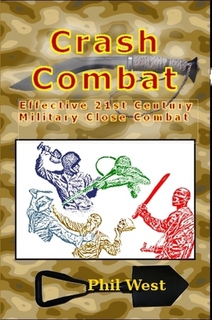
http://www.lulu.com/shop/phil-west/crash-combat/paperback/product-22603842.html


Friday, 27 January 2017

Writing and Time


          One consequence of becoming interested in the length of documents is that I have given some attention to the related field of reading speed and time.

          Over the years I have worked with a number of academics who proceed a workshop with a lengthy introduction. Sometimes this can be very long indeed! It is often claimed that the average human has an attention span of about 40 minutes.  My own experience suggests that despite this an introduction should be kept to under 15 to 20 minutes duration. Adding more content serves no purpose if it does not register.

          According to a Wikipedia article reading speed varies with language and writing system. Interestingly many people read much quicker than they are able to listen to spoken text. For English, reading speed is somewhere between 200 and 300 words per minute, bearing in mind that many people who will be reading an article in English may not have English as their first language. This means that a concise webpage of under 2,000 words will take about six to ten minutes of a reader’s time. If you have written a page of 8,000 words you should ask yourself will it interest a reader enough for them to spend 30 to 40 minutes of their time reading it?


          A fellow writer suggested the use of videos to me. Similar criteria apply, although just as a video is more complex than a written page so too are the factors affecting its acceptability. Personally I find myself reluctant to watch videos of more than ten minutes length unless it promises to cover something I am particularly interested in. If a friend sends me a music clip I find I will give it about 30 to 45 secs before I decide to continue or not. If the intro seems to be one that is particularly drawn out I may jump forward to see if the track improves. With non-musical videos I probably will give it a bit longer to develop, but a lot will depend on the presentation. If a webpage is badly presented and/or poorly structured you can sometimes fish through it for the better parts. With videos this is more difficult so poor structure or presentation will often discourage a viewer.
The Books
http://www.angelfire.com/art/enchanter/epsdbook.html 

http://www.lulu.com/shop/http://www.lulu.com/shop/phil-west/survival-weapons-optimizing-your-arsenal/paperback/product-21488758.html

http://www.lulu.com/shop/phil-west/crash-combat/paperback/product-22603842.html


Thursday, 26 January 2017

Rifle Tactics.

             A significant contribution to the soldier’s load is ammunition. One way to reduce this is to modify how ammunition is expended.
             Full-auto fever. An assault rifle is not a machine gun. The effective range of an assault rifle with fully automatic fire is considerably less than that of a true machine gun. Full auto from a rifle can be used to sweep a trench or clear a room. It will only be cost-effective at longer ranges if the enemy is in a big dumb bunch. Some manuals state the effective range of a rifle on full-auto as 50 metres. About half of this distance is probably more realistic. If the enemy is more than 50 metres away keep your rifle on semi-automatic.
            Let the MGs, mortars and snipers do the work. When machine guns, snipers and mortars are available let them do the majority of the work. There is little point blazing away if you know you have little chance of having an effect. Only let the better marksmen make long range shots. Alternately use collective fire and semi-automatic volleys against the same target. Reserve your rifle ammunition for an assault or to repel assaults against the heavier weapons. The less you shoot the harder it is for the enemy to locate you.

           Suppressive fire doesn’t have to be full-auto. There will be times when rifles must provide suppressive fire. Think about the Westerns you have seen where a character gets pinned down in the rocks. The Winchesters and revolvers used did not need to go full-auto to do this! Suppress an enemy position with aimed, semi-automatic fire.
           It’s Fire or Manoeuvre! Running across a street guns blazing is pure Hollywood but you will see it done in real life. Firing like this has very little chance of hitting a target. Most of your rounds will not even be close enough to suppress an enemy. What this does do is waste your ammunition and draw attention to you!

           If you are moving, concentrate on moving. Tactical movement needs your full attention. You need to be thinking about how you use the cover and concealment available and how you are going to traverse gaps and obstacles. Let other elements provide any suppression. Ideally a moving element should never be visible to an enemy.

           If you are shooting, concentrate on shooting. Use any cover and concealment as effectively as you can. Use the most stable firing posture that your surroundings allow. Standing or moving is the least accurate posture to shoot from. Prone is the most stable. If you are surprised, take cover first, then return fire. If in the open drop prone and then roll for cover.
           Many years ago I came across a statement from the SAS when they were reactivated for operations in Malaya:

           “At first we carried too much ammo. We learnt to carry less. We learnt to shoot less and hit more often.”

           To that we can add a statement from the Home Guard Fieldcraft manual by Maj. John Langdon-Davies. He observes that a Home guard solder will never have as much ammo as he might wish for and that twenty rifle rounds at 25 yards will be far more effective that fifty at 250 yards.

           Know when to fire and when not to.
 
         If you have enjoyed this article or it has been helpful to you please feel free to show your appreciation. Thank you.
The Books

http://www.angelfire.com/art/enchanter/epsdbook.html
http://www.lulu.com/shop/http://www.lulu.com/shop/phil-west/survival-weapons-optimizing-your-arsenal/paperback/product-21488758.html
http://www.lulu.com/shop/phil-west/crash-combat/paperback/product-22603842.html
https://www.amazon.com/Anatopismo-Underrealm-Novella-Phil-West-ebook/dp/B077G7MMFM

Tuesday, 24 January 2017

Covert Pegging.

            Recently I posted a blog on lightweight shelter from the perspective of the soldier. This weekend I was reading some suggestions about covert/ tactical bivouacking. Of interest was a passage that said something along the lines of

            “The pegs are not to be hammered in. A hole is made with a bayonet and the pegs driven in with the head” (The head of the peg, presumably, not that of the soldier!)

            An interesting idea, but some readers will now be recalling that recently I posted on how the bayonet should be one of the first things a soldier should get rid of.

            Last night I put my SA-80 bayonet on the scales. The bayonet alone was 15 oz, about the same as my favourite 10” bladed kukri. The bayonet with scabbard was just over 1 lb 7 oz. This is the later pattern of scabbard without the useful wire cutter and woodsaw fittings. The blade is a sort of bowie-like shape so not sure how well it will poke peg holes in hard ground. The author of the about passage was probably talking about sword bayonets. The latter spike bayonet might be even more useful.

            Obviously there is little point carrying a heavy bayonet just to make holes for pegs. The solution is to find yourself a suitably sized screwdriver. Sharpen the end if necessary and pack it with your pegs. The screwdriver can be used to make peg holes. The shank can be placed under the hook of some peg designs and the screwdriver used to pull up these pegs. The screwdriver can also be used as a peg, so you are able to carry one peg less.


         If you have enjoyed this article or it has been helpful to you please feel free to show your appreciation. Thank you.
The Books

http://www.angelfire.com/art/enchanter/epsdbook.html
http://www.lulu.com/shop/http://www.lulu.com/shop/phil-west/survival-weapons-optimizing-your-arsenal/paperback/product-21488758.html
http://www.lulu.com/shop/phil-west/crash-combat/paperback/product-22603842.html
https://www.amazon.com/Anatopismo-Underrealm-Novella-Phil-West-ebook/dp/B077G7MMFM