Monday, 10 March 2014

Bows in North America and Pellucidar


            Reading through my file collection the other day I came across an old (1930’s?) article on how the North American Indians made their bows. I have some knowledge of English and Asian bows but this was a field I was less familiar with. One of the reasons that this article so interested me was that I am currently reading Edgar Rice Burroughs’s Pellucidar series. Many of the characters in these books use bows and there are frequent references to them constructing new weapons after escaping from capture. The Indians tended to favour flatbow designs and I have heard it suggested that such a bow is easier to construct under field conditions than the D-section English Longbow.

            I will not bother to reproduce the entire article since there are some excellent websites on the topic available on the internet. Some interesting points from the original article were:-
  • The best time to cut wood to make bows was February since the sap had not yet risen into the wood. This was defined in the article as “when the Geese return”.
  • The wood of choice was Osage Orange. Where this was not available a number of other woods were used including ash, hickory and yew.
  • Like the English Longbow, the bowstave need a considerable period of seasoning before any carving could be done. Bowstaves were hung high up in the tepee above the fire to gently season in the heat. Arrowshafts and other items were seasoned in the same way. The bark side of the stave was used for the "back" of the bow -the part that faces away from you.
  • Bow length varied with tribe, intended use and probably the individual. Bows of six foot or longer were known, as were bows of only a few feet. A suggested measure for a bow was the distance from the left hip to the right hand when the hand was held out horizontally to the side. This is about four feet. Some readers will recognize this as illustrated in Lofty Wiseman’s “The SAS Survival Guide” and doubtless this book and the article drew from a similar source. The bow illustrated in that publication is a flatbow.
  • Arrows were often marked with three lightning bolt carvings. Practical purpose of these may have been to reduce the tendency of the arrow to warp. It was also suggested in the article that the grooves might have encouraged blood loss.
  • Arrowheads were bound into the end of the arrowshaft. Some war arrowheads were constructed so that impact with the target would cut the bindings, leaving the head in the target even if the shaft was pulled out.
  •  Hard sinew (from the neck of a buffalo) was sometimes used as an arrowhead. The stated advantage of this was that such heads had a tendency to deflect from the ribs of an animal and slip between them while flint or iron heads would stick, shatter or bend.

            ERB does not give us any description of the type of bows his characters use, although David Innes in "Land of Terror" does tell us:-
A species of the genus Taxus is more or less widely distributed throughout Pellucidar; and I had discovered that its wood made the best bows. For arrows I used a straight, hollow reed that becomes very hard when dry. The tips which I inserted in the end of the reeds were of wood, fire-hardened.
A modern archer of the civilized outer world would doubtless laugh at the crude bow I made then at the edge of the Valley of the Jukans. If he uses a yew bow, the wood for it was allowed to season for three years before it was made into a bow, and then the bow was probably not used for two more years; but I could not wait five years before eating; and so I hacked the limb I had selected from the tree with my stone knife and took the bark from it and tapered it crudely from the center toward each end. I prefer a six foot, eighty pound bow for a three-foot arrow, because of the great size and formidability of some of the beasts one meets here; but of course my bow did not attain this strength immediately. Every time we had a fire, I would dry it out a little more, so that it gradually attained its full efficiency. The strings for my bows I can make from several long-fibered plants; but even the best of them do not last long, and I am constantly having to renew them.”
          In "Return to Pellucidar" in the anthology book "Savage Pellucidar":-
          "Fruit and nuts grew in abundance on the trees and shrubs of the little canyon; but fighting men require meat; and one must have weapons to have meat. These two had not even a stone knife between them, but the first men had no weapons originally. They had to make them.
        Innes and Hodon went into the little stream and hunted around until they found a large mussel. They pried it open with a sharp stone, and each took a half shell. With these they cut two pieces of bamboo-like arborescent grass to form the hafts of two spears. Searching again they collected a number of stones: soft stones, hard stones, flat stones, stones with sharp edges; and with some of these they chipped and scraped at others until they had fashioned two spear heads and a couple of crude knives. While Hodon was finding the toughest fibers with which to bind the spear heads to the hafts, Innes made a bow and some arrows, for this was one of his favorite weapons."

Since Pellucidar was constantly under an unmoving noon-day sun it presumably had no seasons and the trees would have always been filled with sap. Perhaps that was why the bow was so rare on Pellucidar!
         If you have enjoyed this article or it has been helpful to you please feel free to show your appreciation. Thank you.
The Books

http://www.angelfire.com/art/enchanter/epsdbook.html
http://www.lulu.com/shop/http://www.lulu.com/shop/phil-west/survival-weapons-optimizing-your-arsenal/paperback/product-21488758.html
http://www.lulu.com/shop/phil-west/crash-combat/paperback/product-22603842.html
https://www.amazon.com/Anatopismo-Underrealm-Novella-Phil-West-ebook/dp/B077G7MMFM

Friday, 28 February 2014

Umbrella Fighting : Part Four.

In the final part of our discussion of the umbrella as a defensive weapon it is time to consider the counter offensive capabilities of the device.
 
The use of the umbrella in the two-handed “swagger stick” grip has already been covered in an earlier blog, as have the defensive moves, so today we will concentrate on the one-handed “rapier style” offensive techniques. Some of the techniques we will discuss will appear familiar from sport fencing but in certain details there will be differences, as will become apparent.
To make learning the basic principles easier we’ll start off with a ready stance. If used for self-defence you will probably need to go straight into an attack when threatened. The sword stance below is a training aid. Against an actual enemy you are better advised to use the rear overhead stance shown immediately below or the low guard positions shown in the pair of photos after. Note position of the free arm. All of these positions reduce the chances of the umbrella being grabbed. From this you can step back into a two-handed or sword-style stance as the enemy advances.


To learn the thrust adopt a posture with your strong side advanced. Your feet will be between 18” and 24” apart. In his book on Broadsword Sir Richard Burton defines the width of the stance as “two foot-lengths”, which gives us a convenient measure by which to proportion this to smaller or larger individuals. Your knees should be slightly bent and your weight evenly distributed. You will be higher and more erect in posture than a sporting fencer. Your strong hand, holding the brolly, should adopt the position of Tierce. The point will be about level with your weak-side eye and your strong hand level with the chest on the strong-side. Your elbow should be down and in-line with your hip rather than sticking out. It should be comfortably bent and about a fist width from your torso. Your weak-hand will be positioned over your chest ready to defend as Harvey Keitel is kind enough to demonstrate for us.


Next we learn the lunge. Step your lead/strong-side foot forward so there is four foot-lengths distance between your feet and your rear leg is straightened. At the same time extend and straighten your lead arm to thrust. This action may raise your hand a fraction higher than the point and rotate your palm outward if made from Tierce. (For a thrust from Quarte the palm may become turned outward.)
 
In sport fencing combat stops when one player lands a lunge. In self-defence this will not happen so regardless of if you hit your target or not a lunge must be followed by an immediate withdrawal. This is why the lunge we are learning is shorter ranged than that of the sporting fencer. If you are adept at fencing moves such as the lunge or fleche use them, but be wary of overreaching yourself or compromising your ability to withdraw quickly. The withdrawal is made by bending your rear knee and springing back off your lead foot. Your weapon should move back into a guard position. It is recommended that you gain proficiency by practicing the lunge and other footwork without the arm actions.
As well as lunging you also need to be able to move about. The basic movement is the sliding step. Move the foot closest to the direction you want to go, place it down and then adjust the other foot. Longer ranged movements are made with the passing step. Step forward or outward with the rear leg then bring the other leg forward to resume the lead. These actions are detailed in my book so I will not cover them further here. Sporting fencing is linear and performed on a narrow strip of floor. Self-defence will involve more lateral movement so utilize the Pa Kua and Ginga footwork detailed in my book to circle a foe or avoid attacks. The Inquartata, Volte, Demi-Volte or Passata Sotto moves described in my book in the knife-fighting section are also applicable to umbrella fencing.
The tip of a typical umbrella is not sharp. Usually it is a narrow but blunt-ended tip and this is quite interesting from a martial point of view. In modern sporting foil the torso is the only legitimate target area. When rapiers and smallswords were used as weapons the chest area was actually a target area to be avoided if possible. There was too great a possibility of a penetrating blade becoming stuck. This is not a problem with the tip of an umbrella, however. It can apply considerable force with little danger of deep penetration, making it highly effective against the ribs, sternum or the intercostal muscles. The tip also has a considerable effect against softer areas, but is best applied at the more sensitive areas.
 
Our illustration above shows just some of the potential target areas. The points marked on the legs are the femoral nerves and arteries. Psychologically a hit to this area has a similar effect to one directed at the genitals but it is easier to inflict a solid hit here. If you can get behind the attacker the kidney region is a good target but a similar effect can be achieved by hitting the side of the torso as marked. The targets on the neck and head are more dangerous and should be attacked only if your life is in danger.
So far in this article we have considered the point of the umbrella. The handle in your hand can be used to strike should your attacker get within the range of your point. Switching to the two handed moves detailed in a previous blog is another option if range decreases.
A number of other techniques can be used with an umbrella.
The umbrella can be used as a single handed club, striking with the handle. This may be done if the umbrella is being gripped near its middle and there is insufficient time to adopt the fencing or two-handed holds. How effective this will be will depend on the weight, shape and construction of the handle.
Many umbrellas have a hooked or crook handle and this can possibly be used to hook a neck or ankle and pull an attacker off balance. A one-handed grip provides reach but a two handed grip gives more power and permits a quicker follow-up move.
Another move that can get a foe off-balance is to thrust the length of the brolly between their legs and move it to trip them.
 
Umbrellas can also be opened, providing a screen or shield. In 1838, the Baron Charles de Berenger advocated opening an umbrella to distract and hinder an attacker while a handgun was brought into play. We also find references to umbrellas being carried by the bodyguards of the presidents of France and the Philippines. A company even offers examples made with Kevlar fabric. While these will not stop bullets they can defend against lesser missiles such as bricks, acid and eggs. An opened umbrella may also deter an aggressive animal such as a dog.


Part One Fencing Parries with an umbrella.
Part One and a bit An Interlude.
Part Two Swagger stick techniques.
Part Three Commanding the blade or brolly.
         If you have enjoyed this article or it has been helpful to you please feel free to show your appreciation. Thank you.

The Books

http://www.angelfire.com/art/enchanter/epsdbook.html
http://www.lulu.com/shop/http://www.lulu.com/shop/phil-west/survival-weapons-optimizing-your-arsenal/paperback/product-21488758.html
http://www.lulu.com/shop/phil-west/crash-combat/paperback/product-22603842.html
https://www.amazon.com/Anatopismo-Underrealm-Novella-Phil-West-ebook/dp/B077G7MMFM

Thursday, 23 January 2014

Chariots -Celts ride smoother!

            If you are looking for something to read, L. Sprague de Camp’s “The Ancient Engineers” is worth considering. One of the things I learnt from this book was that four-wheeled transport was relatively rare for a considerable period of man’s early history. This was because it was some time before the king pin was invented. The king pin is the pivot point for the front wheels of a cart. Before this invention four-wheeled vehicles were difficult and slow to turn. This is the reason why many ancient peoples favoured two-wheeled transport such as chariots.
 
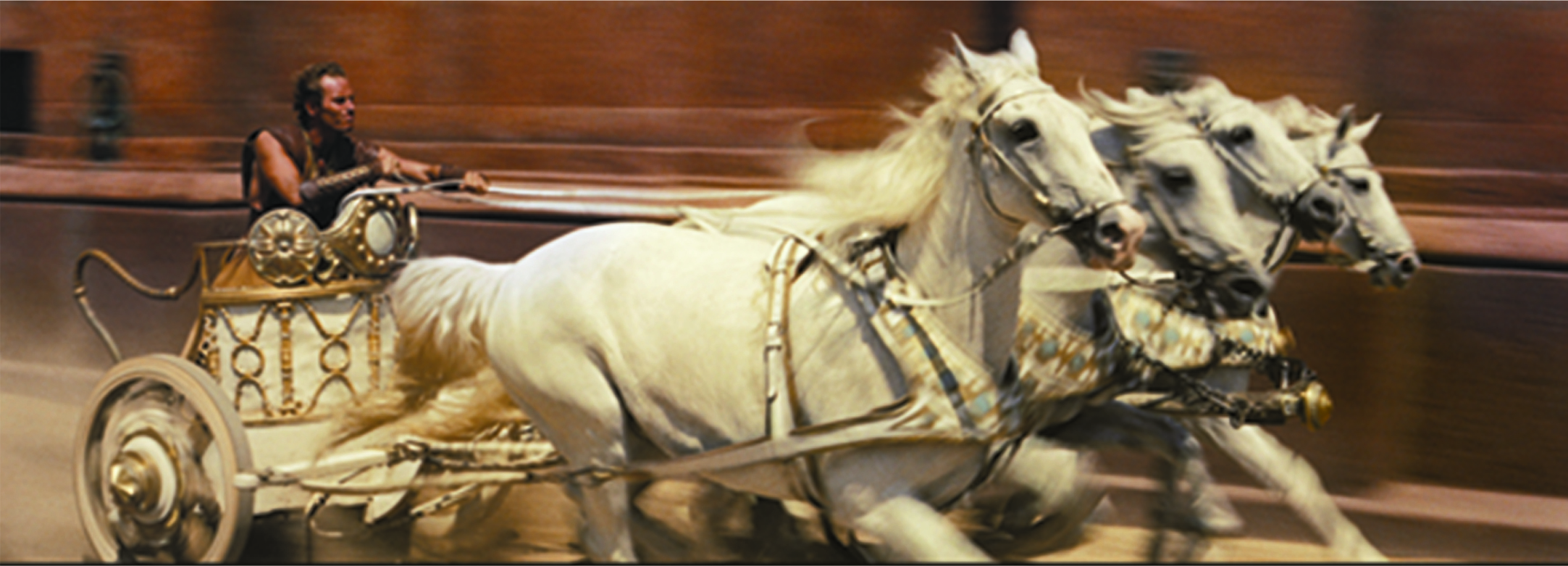
            The book has some interesting information on Roman chariots. Apparently a young man’s chariot was boarded from the rear and driven while standing. This is the sort of chariot familiar to us from movies such as Ben Hur. Older men, however, favoured chariots they could board from the front and drive seated. This seems a metaphor for “youth and energy” versus “age and wisdom”. The young man would travel between towns standing and probably tired and aching when he reached his destination. The older man rode seated and probably in comfort with a blanket across his legs. If we look at horse-drawn transport in later centuries it becomes apparent that the older man’s chariot remained in use under a number of other names. Look at the horse-drawn gig, cabriolet and racing buggy and we see chariots for seated drivers.

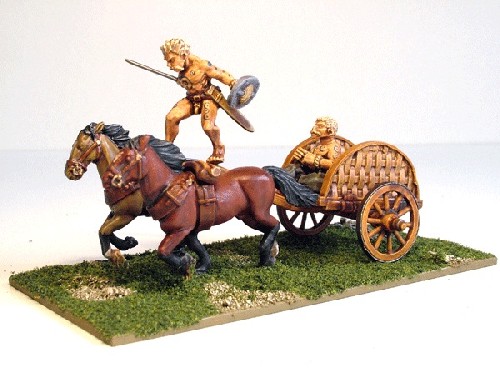
            Chariots are something that interests me for a variety of reasons. Chariots were used by a variety of ancient peoples but if we want to find the most developed designs we do not have to look far from home. Below are some illustrations of Celtic chariots.
 
 
The open back would allow the chariot to be rapidly boarded or dismounted on the battlefield. As you can see, these can be boarded from behind but are also open at the front so the driver can be seated if he desires. Ancient accounts describe how Celtic heroes would run along the pole between the horses to slash at enemies before the chariot. This athletic accomplishment gives us another hint about the capabilities of chariots on the battlefield. This feat suggests that the chariot had slowed or stopped before the infantry. If the chariot was moving at speed there would be little point in slashing at foes before it, they would simply be run down. Many modern historians and re-enactors have discovered that they cannot get horses to charge through an unbroken line of infantry. Horses may not be the brightest of creatures but they will not run into an apparently solid wall! Accounts of chariots smashing through shield walls need to be taken with reservation. The integrity of the formation would have had to have been disrupted first.
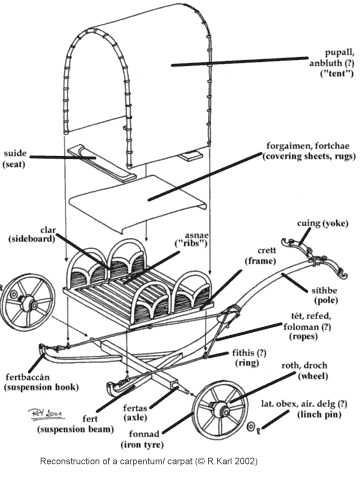
            One illustration shows a detachable canopy could be fitted to a chariot to keep off the rain or provide shade. Possibly this could be used as a shelter when the chariot driver was camped. A plank for the driver to sit on is also shown. Other seating arrangements might have included a storage trunk. A hammock style camp stool would also be a possibility to provide some cushioning against the bumps in the road.
 

            The most interesting feature, in my opinion, and that which marks the Celtic chariots as most advanced technically is that they incorporated a suspension system. Many illustrations show two arched structures on each side of the chariot. Sometimes these are concealed by a side wall that provided protection on the battlefield. Illustrations show a Y shaped structure within each arch and this has been assumed to be wooden. Excavations of Celtic chariots reveal these Y shaped structures were not wood. The photos here and on this site show that these were Y-shaped straps from which the floor of the chariot was suspended. The floor here is made from a lattice of straps but it is possible that in actual use this was covered by a rug, fur or wicker. Experiments with reproductions of Celtic chariots show this floating/suspended floor structure gives the chariot riders a much smoother ride, even when moving at speed.


If you have enjoyed this article or it has been helpful to you please feel free to show your appreciation. Thank you.
The Books

http://www.angelfire.com/art/enchanter/epsdbook.html
http://www.lulu.com/shop/http://www.lulu.com/shop/phil-west/survival-weapons-optimizing-your-arsenal/paperback/product-21488758.html
http://www.lulu.com/shop/phil-west/crash-combat/paperback/product-22603842.html
https://www.amazon.com/Anatopismo-Underrealm-Novella-Phil-West-ebook/dp/B077G7MMFM
https://www.amazon.com/Hell-Ay-non-partisan-sourcebook-role-play-system-ebook/dp/B07FQSHSQC

Thursday, 19 December 2013

Gender Neutral Pronouns.

            For a long time I have had a fascination with the English language. My girlfriend is Brazilian and taught herself English in just a couple of years, yet her mastery is better than that of many native English speakers I regularly encounter. I know university lecturers that have no concept of how to use an apostrophe, which is just embarrassing. My girlfriend will often come up with a well chosen phrase that is not “correct” English but has me scratching my head as to why we do not use that particular phrase.

            If anything, my interest in language has deepened and diversified during the last year. I came across the SaypYu project for a more easily learnt phonetic system which has made me appreciate just how many English words are not spelt as they are pronounced. I also came across Ogden’s Basic English system which has many interesting ideas.

           Some languages, such as French, assign a gender to nouns, to the frustration and bafflement of the English-speaking student. English is thankfully devoid of most noun genders so it is perhaps surprising that the English language lacks a gender-neutral pronoun for singular individuals. To some people this is a big political issue reprehensive of all sorts of things. There is, however a real need for a workable pronoun that can refer to an individual when the gender is unknown, indeterminate or not relevant. US Field Manuals, for example,  find it necessary to begin with a statement that “Unless this publication states otherwise, masculine nouns and pronouns do not refer exclusively to men.”

            As one might expect, many invented pronouns have been proposed over the years. This article gives a good account of the practicability of some of these.

            Ze/Hir and derivatives apparently see some use in the homosexual and transgender communities. That will probably mean it is highly unlikely to find much favour with institutions such as the military who are also in need of a useful gender-neutral term. On a practical note “hir” would seem to be pronounced “hɘr”, which is the same pronounciation as “her” so the distinction is graphic rather than also being phonetic.

            The best candidate seems to be Ne/Nir. The variations are listed as Ne/Nem/Nir/Nirs/Nemself. This seems an unnecessary number of variations and I always favour simplification over unnecessary complication. The Feminine Singular pronoun makes do with She/Her/Hers/Herself so I propose a similar format be followed for Ne.

            “Ne” would actually be pronounced “ni” in the same way that “he” and “she” are infact pronounced “hi” and “shi”. The last thing that English needs is more non-phonetic words. Use of the spelling “Ni” will help distinguish it from other pronouns. Implementing these ideas we have the gender-neutral singular pronoun of :-

Ni/Nir/Nirs/Nirself

            This is used grammatically in exactly the same way that one would use She/Her/Hers/Herself.

            Another potentially useful but seldom used innovation is “Mx.” as a gender-neutral honorific for when you do not know if someone is a Mr, Mrs, Miss or Ms. I suspect that this is more useful for correspondence than everyday speech.

            If in future blogs you come across “ni” or “nir” do not be frightened. It is just an example of language evolving in a practical direction. Feel free to use it yourself and spread the word(s)!

 
         If you have enjoyed this article or it has been helpful to you please feel free to show your appreciation. Thank you.
The Books

http://www.angelfire.com/art/enchanter/epsdbook.html
http://www.lulu.com/shop/http://www.lulu.com/shop/phil-west/survival-weapons-optimizing-your-arsenal/paperback/product-21488758.html
http://www.lulu.com/shop/phil-west/crash-combat/paperback/product-22603842.html
https://www.amazon.com/Anatopismo-Underrealm-Novella-Phil-West-ebook/dp/B077G7MMFM