Friday, 9 May 2014

Post Apocalyptic Heroric Fantasy Armaments

                Friday, so I get to post something a little more off the wall.
            Recently I was enjoying the cartoon Korgoth of Barbaria. A great pity they only ever made the pilot. One interesting point of this Conan parody is that it is set in the future. It is a genre that might be termed Post-apocalyptic Heroic Fantasy. There have been a number of movies and books along these lines. One movie that immediately springs to mind is “Steel Dawn”, where we learn shoulder pads and 80’s hairstyles can survive just about anything.  Novels along these lines include Sterling E. Lanier’s “Hiero Desteen” novels, Robert Adams’ Horseclans series and Fred Saberhagen’s “Empire of the East” and “Book of Swords” series. I have not read all of these, but plan to read some of these soon.


           What strikes me about some of the stories in this genre that I have seen or read is that if anything they are too medieval and fail to meet some of the potential of a post-apocalyptic society regressed to the dark ages. Would people in such a situation be using swords and bows? Very probably. The survivors of such an event would also have the benefit of knowledge, however. If you look through history it is obvious that some inventions could not be created until certain technological achievements had occurred. It is also obvious that some inventions could have appeared centuries earlier than they did, but the idea just never occurred to anyone. This is why some inventions were in use hundreds of years in one part of the world before they were introduced or discovered in others.
            A society that exists centuries after a post-apocalyptic event may indeed rely heavily on animal transport and fight mainly with bows and swords. They may not be able to build Jumbo Jets or M16s, but they would know that such things were once possible. Likewise, they would know that lower technology devices such as steam engines, chemical matches and rockets are possible. Given a few decades they may be able to produce their own versions.


            Let us consider some weapons. Gunpowder was being produced in China as early as the tenth century and there isn’t really any reason why it might not have been created earlier. Source the three components, mix them together and confine them in a tube and you have a rocket. It is very likely a future barbarian world would have rockets where the raw materials for gunpowder could be found. The Chinese made some interesting weapons by just adding simple rockets to arrows. Packed into a basket and given a common fuse and a single soldier could fire scores of them into a formation within a couple of seconds. What is more, every soldier in a company or battalion could carry and fire such a device, then take up his bow or spear to fight in a more conventional fashion. Larger rockets, capable of starting fires or exploding were also relatively simple devices and could be fired from wagons or ships. While the ancient Chinese developed a number of rocket systems they were a weapon very much ignored in the west. This may be because in Europe the destruction of fortifications was more of a priority and cannon were better suited to such roles. China, in contrast, enjoyed a long period of peace so the development of gunpowder weapons languished somewhat during this time.
            What of more conventional guns? Once you have the gunpowder a muzzle-loading cannon is a relatively simple device that can be surprisingly potent. Casting a barrel takes some knowledge but could be established by research and experimentation. As late as the 19th century mortars and some other light guns were constructed from reinforced timber. In “Space Viking” by H. Beam Piper a character opinions that gunpowder seems to be one of the last items of knowledge a decivilizing world loses.

            Personal firearms pose a more interesting question. Many guns are mechanically very simple. Something like an M16 would be difficult to produce, relying on precision parts, polymers and aluminum castings. A sten gun, however, is just a few tubes and springs and such guns have been made in underground workshops and village forges as we know. The real challenge for our post-apocalyptic warriors will be in the production of ammunition. Producing something like self-contained modern pistol and rifle ammunition may prove too difficult. Ammunition may be more likely to resemble 19th century paper cartridges or shotgun ammunition. These are simpler to make and reload, but probably will not be suited to automatic or other complicated feed mechanisms. Where personal firearms may exist they may be more likely to be single shot or double barreled weapons. Such guns may not have that many advantages over weapons such as the bow or crossbow. Making an arrow or quarrel requires more skilled labor than primitive firearm ammunition but can be reused. Compare a simple gun and a bow and you will find that the bow often outperforms the gun. Guns did not replace bows because of performance advantages but because they and their ammunition were easier to mass produce. If guns are to persist in the armoury of future barbarians it will most likely be if they offer a unique capability. Pistols and shotguns can supplement a sword in close combat, even if they are only single or double shot. Rifles will have to compete with the bow so we are likely to see them designed more towards precision longer range shooting where their flatter trajectory offers some advantages.
         If you have enjoyed this article or it has been helpful to you please feel free to show your appreciation. Thank you.
The Books

http://www.angelfire.com/art/enchanter/epsdbook.html
http://www.lulu.com/shop/http://www.lulu.com/shop/phil-west/survival-weapons-optimizing-your-arsenal/paperback/product-21488758.html
http://www.lulu.com/shop/phil-west/crash-combat/paperback/product-22603842.html
https://www.amazon.com/Anatopismo-Underrealm-Novella-Phil-West-ebook/dp/B077G7MMFM

Monday, 28 April 2014

Learning from Honey Badgers. Using your environment.

            I once saw a film clip of a baby elephant that had become trapped in the mud. It was impossible for the elephants to lift its weight. Instead, several elephants worked together to construct a ramp out of mud and the baby was able to escape.

         I came across this video today about a honey badger. Some useful ideas about using what is in your local surroundings to your advantage.
         If you have enjoyed this article or it has been helpful to you please feel free to show your appreciation. Thank you.
The Books

http://www.angelfire.com/art/enchanter/epsdbook.html
http://www.lulu.com/shop/http://www.lulu.com/shop/phil-west/survival-weapons-optimizing-your-arsenal/paperback/product-21488758.html
http://www.lulu.com/shop/phil-west/crash-combat/paperback/product-22603842.html
https://www.amazon.com/Anatopismo-Underrealm-Novella-Phil-West-ebook/dp/B077G7MMFM

Saturday, 26 April 2014

Birrus Britannicus : More on Cloaks

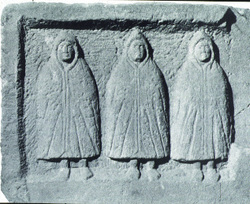
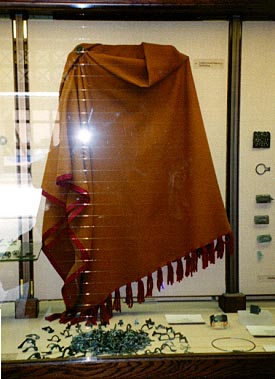
            After yesterday’s blog on cloaks I came across mentions of a foul weather cloak called the Birrus Britannicus. It seems the Romans associated Britain with cold and wet weather, hence the name. Such cloaks were widely used in Britian by both the locals and Roman visitors.  


            This website has some information on making one with a “bindweed leaf” shaped hood that was often associated with these cloaks. (Note that the page uses the spelling “byrrus” rather than the more commonly used “birrus”. The site has a number of other basic grammatical mistakes so this is probably an error).
            The hood is made out of two pieces described  as “diamonds” -actually kite-shapes with two sides of 55cm and two of 68cm. No information is given on the angle between these sides so you will probably have to construct a mock-up to get the volume right. The two 55cm sides are sewn together to make the top and back of the hood and one of the 68cm sides sewn to the cloak. You may like to make the hood part double thickness or line it. The article mounts this hood on a semi-circular cloak but it seems Birrus Britanicus could also be oval or circular designs, as described in my last post. The “triangle piece at the throat” is not clear in the photographs but is evidently a fly or baffle type piece to prevent drafts at the neck area. I suggest you reserve some material, join the cloak and hood and then work out the shape and form of this piece.
            The most practical fastening for such a cloak is probably one or more hook and loops, with another to secure the throat bit.  
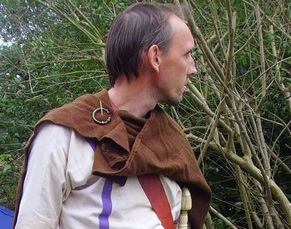
            On the subject of fastenings, I mentioned cloak pins in the last post. I have seen scores of these in museums with no indication on how they were actually used to fasten a cloak. The answer is both simple and ingenious! A functional example could easily be made with some pliers and heavy wire!

         If you have enjoyed this article or it has been helpful to you please feel free to show your appreciation. Thank you.
The Books

http://www.angelfire.com/art/enchanter/epsdbook.html
http://www.lulu.com/shop/http://www.lulu.com/shop/phil-west/survival-weapons-optimizing-your-arsenal/paperback/product-21488758.html
http://www.lulu.com/shop/phil-west/crash-combat/paperback/product-22603842.html
https://www.amazon.com/Anatopismo-Underrealm-Novella-Phil-West-ebook/dp/B077G7MMFM

Friday, 25 April 2014

Cloaks for Modern Survival

                Last night I was once again discussing something that is somewhat an oddity in the history of clothing.

            For thousands of years soldiers, outdoorsmen and many other prudent humans have used and valued cloaks as useful items of clothing. A cloak traps lots of air to keep you warm and yet is easily vented to keep you dry. A cloak can shed the rain and snow, protect from the wind and is large enough to act as a useful blanket should you need to sleep out. Then, sometime during the 19th or early 20th century cloaks became rarer and I have never encountered as sufficiently convincing explanation as to why this was.

            A cloak still has much to recommend it to a survivalist or outdoorsman. Currently in Afghanistan insurgents are shielding themselves from expensive high tech thermal imagers and infrared systems using woollen blankets.

 
            One of the simplest of practical cloaks is what the roman legionary called a Sagum. The sagum was a suitably folded square or rectangular piece of material fastened to itself at the shoulder with a brooch or pin. Easily constructed (if you had a fastener) and a useful blanket too. Many cloaks are just blankets with a bit of tailoring. The Scottish word “Plaid” is derived from the term for blanket and the great plaid was big enough to sleep out in. I will discuss the plaid in more depth some other time.

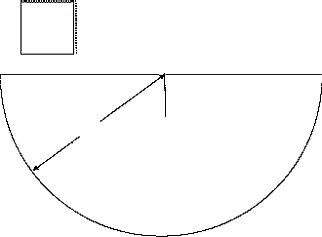
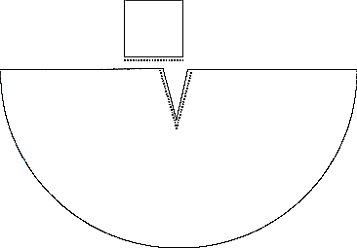
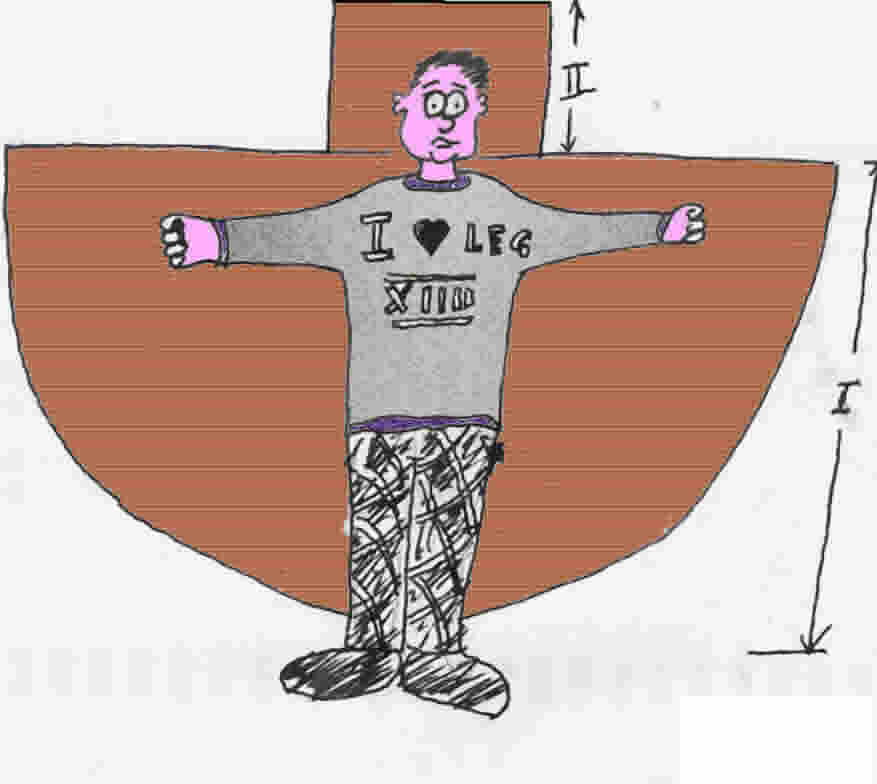
            A step up from the Sagum was the hooded cloak that the roman soldier called a paenula. This page has a rather nice, simple method for making a semi-circular one. Take a bit of wool, 60 x 120” (1.5 x 3m) and cut out a semicircle using a length of string as a compass. Cut an 8” slit widthwise from the middle of the straight edge and sew the two rectangular hood halves to this. Hem and finish as necessary. If we are considering our cloak as a practical field garment then 60” may be on the long side. Ideally you want the bottom at about calf height. Two quarter circles can be cut from a smaller piece of cloth and sewn together.

            The same page shows how to make a circular paenula. Essentially you make a semi-circular paenula then sew a second semicircle to the front edge. The illustration shows a poncho style but one could extend the neck slit down to the edge to make a circular cloak that opens up the front. The circular paenula has more folds of cloth to trap more air. On the other hand it uses about twice as much cloth and may be difficult to roll into a handy bundle.

            A compromise is the oval paenula. Take a cloth of about 60” width and of a length twice the length that you want the final thing to be. I am a little above average height and the distance from my shoulder to below the knee is about 50”. A piece of cloth between eight and nine feet will probably be about right. Interestingly making an oval cloak and a semi-circular needs about the same amount of working material. There will be less wastage with the oval cloak and it will of course be a little heavier. You may need an extra piece of material to make the hood.

            Lining the hood part of the cloak can be a good idea. Loops and toggles or other fastenings were often fitted to keep the cloak closed without the need for a brooch. If your cloak is going to be “modern” then a few press-stud poppers might be worth considering.

            A cloak of a dull, neutral shade with a few bits of scrim or frayed cloth added for camouflage might be a very handy thing for a hunter that needs to spend some time stationary, waiting for his shot.

         If you have enjoyed this article or it has been helpful to you please feel free to show your appreciation. Thank you.
The Books

http://www.angelfire.com/art/enchanter/epsdbook.html
http://www.lulu.com/shop/http://www.lulu.com/shop/phil-west/survival-weapons-optimizing-your-arsenal/paperback/product-21488758.html
http://www.lulu.com/shop/phil-west/crash-combat/paperback/product-22603842.html
https://www.amazon.com/Anatopismo-Underrealm-Novella-Phil-West-ebook/dp/B077G7MMFM