Tuesday, 8 October 2013

Spetznaz String Vest.

            Today I’m going to post another exert from the book Aquarium, again detailing Spetsnaz apparel as described in the book.

“As for the rest of a Spetsnaz soldier's clothing, his underwear is made of thin linen. It should be new but already used a little and laundered at least once. Over the thin underwear he wears a vest made of a thick string, so that there is always a layer of air about a centimetre deep between the underwear and the outer garments. This was cleverly thought out. If it's very  hot and you are running with sweat and your whole body is burning, the string vest is your salvation. Your clothes do not cling to your body and there is excellent ventilation. When it's cold the air pocket protects the body like a feather duvet, and moreover, weighs nothing. The string vest has yet another purpose. If a mosquito get its nose through your clothes it reaches empty space and not the body. Only in very difficult circumstances does a Spetsnaz soldier allow himself to be driven out into the open. He spends his time in forests and marshes. He may lie for hours in a burning hot marsh or in fierce stinging nettles with clouds of mosquitoes buzzing around him. Only the string vest can save him then. Over it he wears trousers and a tunic of green cotton material. All seams are treble-stitched. The tunic and trousers are soft but hard-wearing. At the elbows, knees and shoulders the material is trebled for greater strength”.
I have experimented with using a string vest as outdoor wear. The time that comes to mind is during a concert in a park on a very hot day. I wore the vest under a relatively heavyweight tee-shirt and had no problems with clothing sticking to my skin, despite the humidity. As the sun went down and the air got chilly I remained comfortable, so it is an idea worth trying out.
 
If you have enjoyed this article or it has been helpful to you please feel free to show your appreciation. Thank you.
The Books

http://www.angelfire.com/art/enchanter/epsdbook.html
http://www.lulu.com/shop/http://www.lulu.com/shop/phil-west/survival-weapons-optimizing-your-arsenal/paperback/product-21488758.html
http://www.lulu.com/shop/phil-west/crash-combat/paperback/product-22603842.html
https://www.amazon.com/Anatopismo-Underrealm-Novella-Phil-West-ebook/dp/B077G7MMFM

Monday, 7 October 2013

Greatcoat Tricks, old and speztnaz


I’ve just come across an interesting comment about greatcoats being used by Russian soldiers in the 19th Century. The author notes that the coats were long enough to fall somewhere between the knee and the ankle in length and that the bottoms would often become heavy from getting caked with mud. He observes that many soldiers solved this by adding hooks and eyes to the coat so the skirts could be hitched up to make a shorter coat. Regular blog readers will recall that most WW2 Russian greatcoats used hooks and eyes instead of buttons, which were probably easier to use when wearing thick gloves or mittens. The idea of shortening the greatcoat, in turn, reminded me of this interesting passage in Viktor Suvorov’s book “Aquarium”.

“The saboteur also wears an outer garment like an anorak. It is thick, warm, light and waterproof. In it you can lie in a marsh without getting wet or sleep in the snow without freezing. It comes down to the middle of the thighs so as not to interfere with walking, and if need be you could sit for days on a patch of ice, as it provides something to sit on. It is very full at the bottom, which is important when running or walking fast. But if necessary the lower part can be pulled in tightly round the legs and so keep the warmth in. The Spetsnaz used to have similar trousers, padded and warm. But that was a mistake. When you have to walk for days on end without stopping such trousers are a nuisance. They upset the ventilation. Our wise ancestors never wore fur-lined trousers. Instead they had fur coats reaching down to their heels. And they were right, because fur trousers make you sweat but a long coat doesn't. We have now learnt this lesson, and a Spetsnaz soldier has not only a top coat, but a long skirt covering his body almost down to the heels which he can attach to it. In this way he can keep warm, but is never too hot. The skirt is easily unbuttoned and rolled up so that it does not take up much space in the man's kit. In the old days the top coat was reversible. One side was white and the other grey and green in patches. But that was also a mistake. The coat had to be soft inside, like a woman's skin, but on the outside it had to be as rough as rhinoceros hide. That is why the top coats are no longer reversible. They are soft inside and rough on the outside. And they are light grey in colour, like last year's grass or dirty snow. It's a very well-chosen colour. But in case of great need a white camouflage smock can be worn over the coat.”

 
         If you have enjoyed this article or it has been helpful to you please feel free to show your appreciation. Thank you.
The Books

http://www.angelfire.com/art/enchanter/epsdbook.html
http://www.lulu.com/shop/http://www.lulu.com/shop/phil-west/survival-weapons-optimizing-your-arsenal/paperback/product-21488758.html
http://www.lulu.com/shop/phil-west/crash-combat/paperback/product-22603842.html
https://www.amazon.com/Anatopismo-Underrealm-Novella-Phil-West-ebook/dp/B077G7MMFM

Wednesday, 2 October 2013

Out in The Snow. Part Two : Footwear.


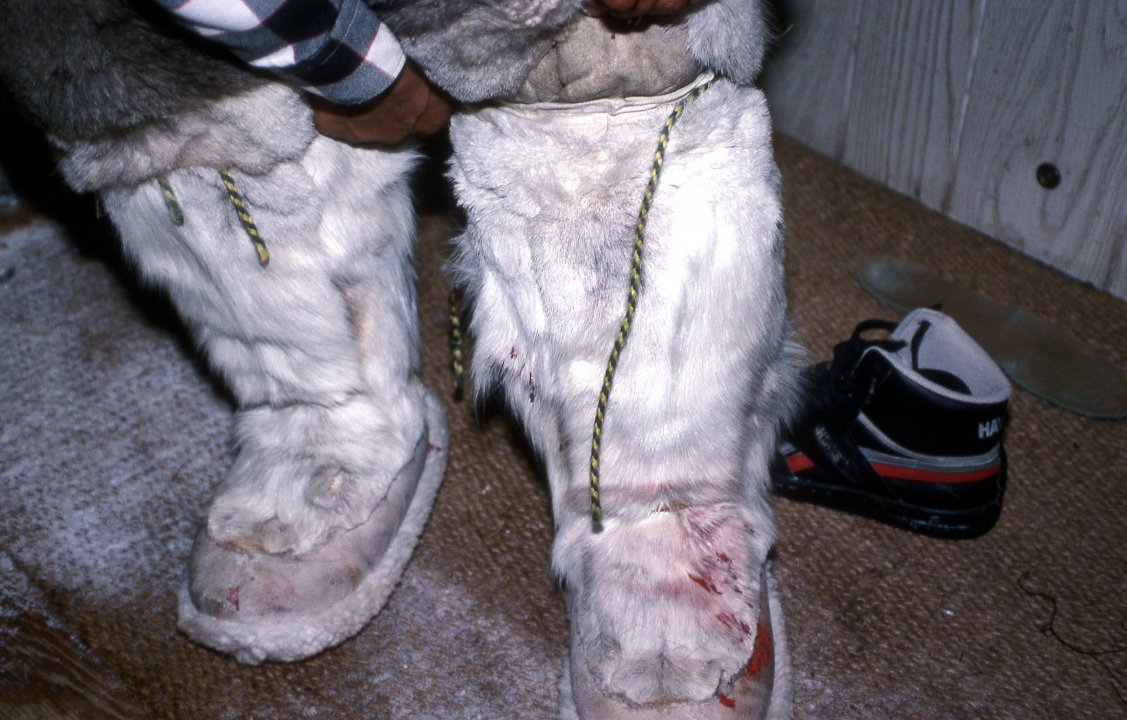
            Today I am going to continue on the previous topic of cold weather clothing, with an emphasis on footwear. Once again, we will start by looking at the Inuit solution to keeping your feet warm while the snow is on the ground. Mukluks or Kamik are constructed in the same way as the clothing already discussed. Two layers of fur, the inner with the fur facing inwards and the outer with the fur outwards. Interestingly Mukluks are sometimes used with a sealskin moccasin that fits over the outside and provides extra insulation and reduces wear on the mukluk.


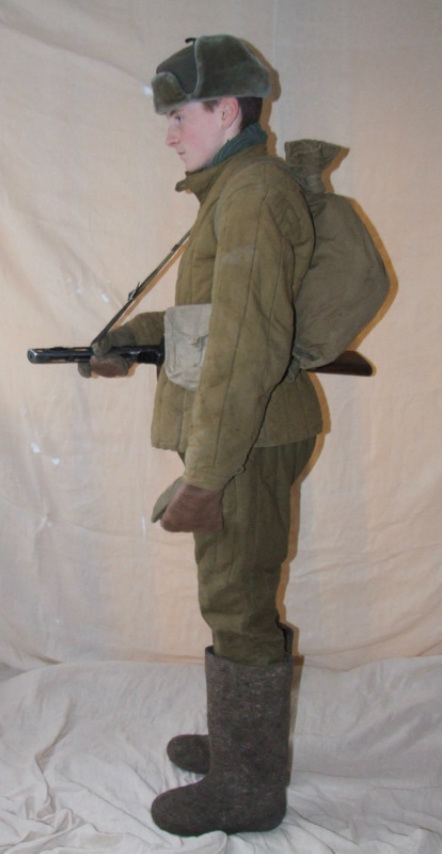
            The Russian solution to snow on the ground is the valenki. Valenki are similar to the Mukluk in principle but made from thick felt rather than a double layer of fur. Like the Mukluk they trap a layer of warm air while allowing the free passage of perspiration. I have heard that valenki are quite good for when the snow is deep and temperatures low but not so good when the coverage of snow is less even or when temperatures are warm enough for snow to get slushy. Not surprisingly, anuseful addition to Valenki are galoshes. These add a sole that provides grip and prevent water soaking into the valenki. Galoshes are of course impermeable but I suspect this is not usually a problem since the rest of the valenki is exposed to the air. Perspiration that accumulates within the galosh is soaked up by the felt and wicks up to the higher parts of the valenki where it can escape.
 

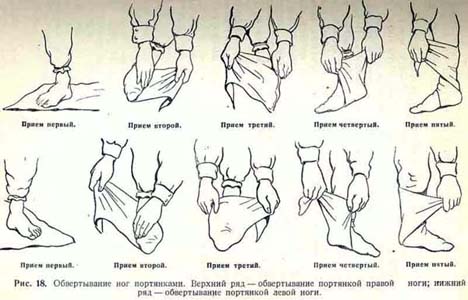
            Famously, Russian soldiers order their winter boots a size larger than their summer boots so they can wear more insulation within them.  I don’t know if this is applicable to valenki too but this does bring us to the interesting topic of what is worn within boots. Up until about 2008 Russian soldiers wore foot wrappings (Portyanki). Foot wrappings were once the norm for footwear in europe, socks being more labour intensive to make and expensive. The use of foot wrappings persisted longer in military circles, surviving into the 21st century in the Russian army. This site nicely sums up the merits of foot wraps.

“There are some advantages to wearing foot wraps as opposed to socks. Portyanki better support the foot and air trapped in the folds better insulate the foot. Also, when wet they can be dried quicker than traditional socks. Wrapping the portyanki is a difficult technique to perfect and getting it wrong can cause some discomfort. However, once perfected, they are extremely comfortable to wear and obviate the need to perhaps wear several pairs of socks with sapogi boots.”

            Apparently Russian soldiers would wear their Portyanki for a week at a time, exchanging them for fresh ones when they took their weekly shower. The old ones were boiled. Not surprisingly many soldiers joked that that Portyanki were the true chemical weapons.

            I don’t intend to abandon my socks, but foot wraps are a useful idea to know about if need to improvise footwear or provide extra insulation to go over your socks.


         If you have enjoyed this article or it has been helpful to you please feel free to show your appreciation. Thank you.
The Books

http://www.angelfire.com/art/enchanter/epsdbook.html
http://www.lulu.com/shop/http://www.lulu.com/shop/phil-west/survival-weapons-optimizing-your-arsenal/paperback/product-21488758.html
http://www.lulu.com/shop/phil-west/crash-combat/paperback/product-22603842.html
https://www.amazon.com/Anatopismo-Underrealm-Novella-Phil-West-ebook/dp/B077G7MMFM

Wednesday, 25 September 2013

Out in the Snow, Part One


            For the past couple of days for some reason I have been thinking about winter gear. What is the best equipment to have if you have to operate in the snow like the final level of the movie Inception? In that movie the “good guys” wear pure white cold weather gear, but in the real world that is not too practical. During the invasion of Russia the German army issued a number of items of winter clothing in white.  Troops naturally tended to wear these warm items all the time and very soon the white got dirty and lost all its camouflage performance. The correct approach was to make warm clothing and primary camouflage separate and issue thin snowshirts, helmet covers or oversuits that could be worn only when needed and easily washed and dried when dirty. Last night I watched the old black and white movie “Armored Command” which featured American soldiers in WW2 operating in the snow. No one in this movie attempts to use snow camouflage. This got me thinking on the topic of snow gear again.
 

            The first people to consider when it comes to cold weather survival are the Inuit. They brave the Artic in a parka and trousers of caribou skin. According to an excellent museum exhibit I saw in Berlin (or more probably Copenhagen) these garments are made from a double layer of furred hide, the outer layer with the fur outward and the inner fur in and are worn over the bare skin. The exhibition also had some embroidered seal skin g-strings that were apparently the only undergarment worn in winter and sometimes the only thing worn while relaxing in the “warmth” of a shelter. In sub-zero conditions the challenge is often to keep your garments dry and avoid them becoming soaked with condensing perspiration. I imagine Inuit winter clothing is fairly permeable and being relatively thin ensures that the dew point occurs outside the garments. I have used Buffalo Double P clothing that I suspect works on a similar principle. This consists of a layer of fibre pile (artificial fur) with an outer layer of pertex, which is windproof but quick drying and permeable. Buffalo recommend that their items be worn with the fibre pile next to the bare skin so that it can wick perspiration away to escape through the pertex before it can condense.

            The Russians are the obvious military to think about when it comes to sub-zero military operations, but if you know your history you will know that the Finns taught them a few hard lessons about winter warfare. Checking one of the few sources I had handy on Finnish military uniforms in the 1940s indicated that each Finnish soldier was issued with a sheepskin outfit for winter operations. Like most armies of this time period the uniform worn underneath was made from wool. I have little experience wearing sheepskin, but I suspect that it will behave rather like the Inuit clothing.

            The archetypical Russian soldier’s winter clothing is the Telogreika or padded jacket, often worn with matching padded trousers. Apparently the filling was cotton batting or cotton wool. If this is true, and not a “Wiki-fact” I would expect these garment to become pretty cold and uncomfortable if it is allowed to get wet. The Telogreika was originally intended to be worn under the greatcoat but ended up being worn on its own, particularly when a long greatcoat would be too encumbering. The Russian greatcoat was often carried rolled up and what most people assume to be a blanket roll being worn by Russian soldiers was in fact the greatcoat. Russian greatcoats had hook and eye fastenings instead of buttons, which seems unusual but if you think about it was probably much easier to use if you are wearing thick mittens or gloves.

            That will have to do for today’s blog. I will cover more specific topics later.

 
         If you have enjoyed this article or it has been helpful to you please feel free to show your appreciation. Thank you.
The Books

http://www.angelfire.com/art/enchanter/epsdbook.html
http://www.lulu.com/shop/http://www.lulu.com/shop/phil-west/survival-weapons-optimizing-your-arsenal/paperback/product-21488758.html
http://www.lulu.com/shop/phil-west/crash-combat/paperback/product-22603842.html
https://www.amazon.com/Anatopismo-Underrealm-Novella-Phil-West-ebook/dp/B077G7MMFM